How to Choose the Right Clothing Size Online
Size labels vary between brands, so the reliable way to buy clothes online is to compare your own measurements with each product's size chart. Here's how.
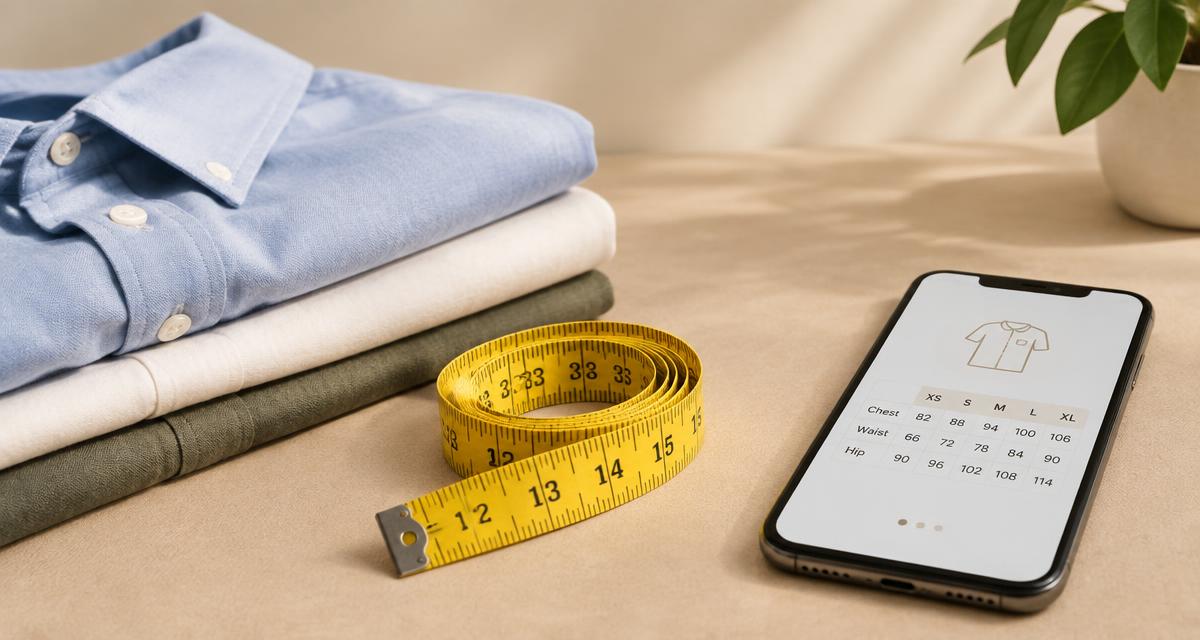
The short answer: ignore the letter on the label and compare your body measurements with the size chart on the specific product you want. A "Medium" from one maker can be a full size larger or smaller than a "Medium" from another, but centimetres and inches don't change.
Why clothing sizes differ between brands
There is no single worldwide sizing standard that every manufacturer follows. Each brand builds its patterns around its own idea of a typical customer, and many garments are produced in regions that use different size systems. Style matters too: an oversized hoodie and a slim-fit shirt can both be labelled "L" while being cut very differently.
That's why two items you own in the same size may fit completely differently — and why measurements are more reliable than labels.
Take your measurements first
You only need a soft tape measure and a couple of minutes. Our step-by-step guide on how to measure yourself for online clothing covers each one in detail; the essentials are below.
Bust or chest
Measure around the fullest part of your chest, under the arms, keeping the tape level across your back. Breathe normally rather than holding your breath.
Waist
Measure around your natural waist — usually the narrowest point of your torso, a little above the belly button. For trousers and jeans, also note where you actually wear the waistband, as that may be lower.
Hips
Stand with your feet together and measure around the fullest part of your hips and seat.
Inseam
Measure from the top of your inner thigh down to where you want the trouser hem to finish. The easiest method is to measure the inseam of a pair of trousers that already fit you well — see how to measure for jeans.
How to use a size chart
- Open the size chart for the exact product, not a generic chart for the whole shop.
- Check whether the chart lists body measurements or garment measurements. Garment measurements are the flat size of the item itself and will be larger than your body where the item is meant to be loose.
- Check the units — many charts use centimetres. One inch is 2.54 cm.
- Find the row where your most important measurement fits. For tops that's usually chest; for bottoms it's waist and hips.
- Read the product description for fit notes such as "slim fit", "relaxed" or "oversized".
Comparing your measurements with the product chart
| Size | Chart chest (body) | Fits a 98 cm chest? |
|---|---|---|
| S | 88–94 cm | Too small |
| M | 95–100 cm | Yes — best match |
| L | 101–106 cm | Roomier fit |
The numbers above are illustrative only; always use the chart on the product you're buying.
What to do when you're between sizes
- Decide which measurement matters most. For a fitted dress, the bust or hips may decide it; for a shirt, the chest and shoulders.
- Think about the fabric. Stretchy knits (with elastane or spandex) are more forgiving, so the smaller size may work. Rigid fabrics such as 100% cotton denim or linen usually call for the larger size.
- Consider the intended fit. An item described as oversized is already cut generously, so you may prefer your usual or smaller size. Our guide to oversized vs regular fit explains the difference.
- Size up for layering. If you plan to wear a jacket over thick knitwear, choose the size that allows for it.
Common sizing mistakes
- Assuming your usual size is the same everywhere.
- Measuring over bulky clothes, or pulling the tape too tight.
- Confusing garment measurements with body measurements.
- Mixing up size systems (US, UK and EU numbers are different — see how to find your clothing size).
- Skipping the product description, where fit notes and stretch information usually live.
Bottom line
Write your measurements down once and keep them on your phone. Then, whenever you shop — whether you're looking through women's clothing or men's clothing — check the product's own chart and fit notes before choosing a size.